Why Leggings Ride Down at the Thigh, Not the Waist
Quick Answer: When the waistband holds but the legs still sag, the fabric is being over-stretched at the widest point of your thigh and cannot recover, so it borrows length from above - dropping the crotch seam and creating slack at the knee. Tightening the waistband does nothing because the waistband was never the problem. What helps is fabric with higher recovery rather than more stretch, a pattern with enough thigh circumference that it is not at maximum extension standing still, and checking the thigh measurement on the size chart rather than the hip.
The usual advice about leggings sliding down assumes the waistband failed. Size down, look for a wider band, try a drawcord.
But this is a different problem, and it is the one that shows up most on stronger legs. The waistband has not moved at all. It is exactly where you put it. Meanwhile the crotch seam is two inches lower than it was at the start of the session, the knees have gone baggy, and you have hitched the legs up four times.
That combination - stable waist, sagging legs - points at one thing.
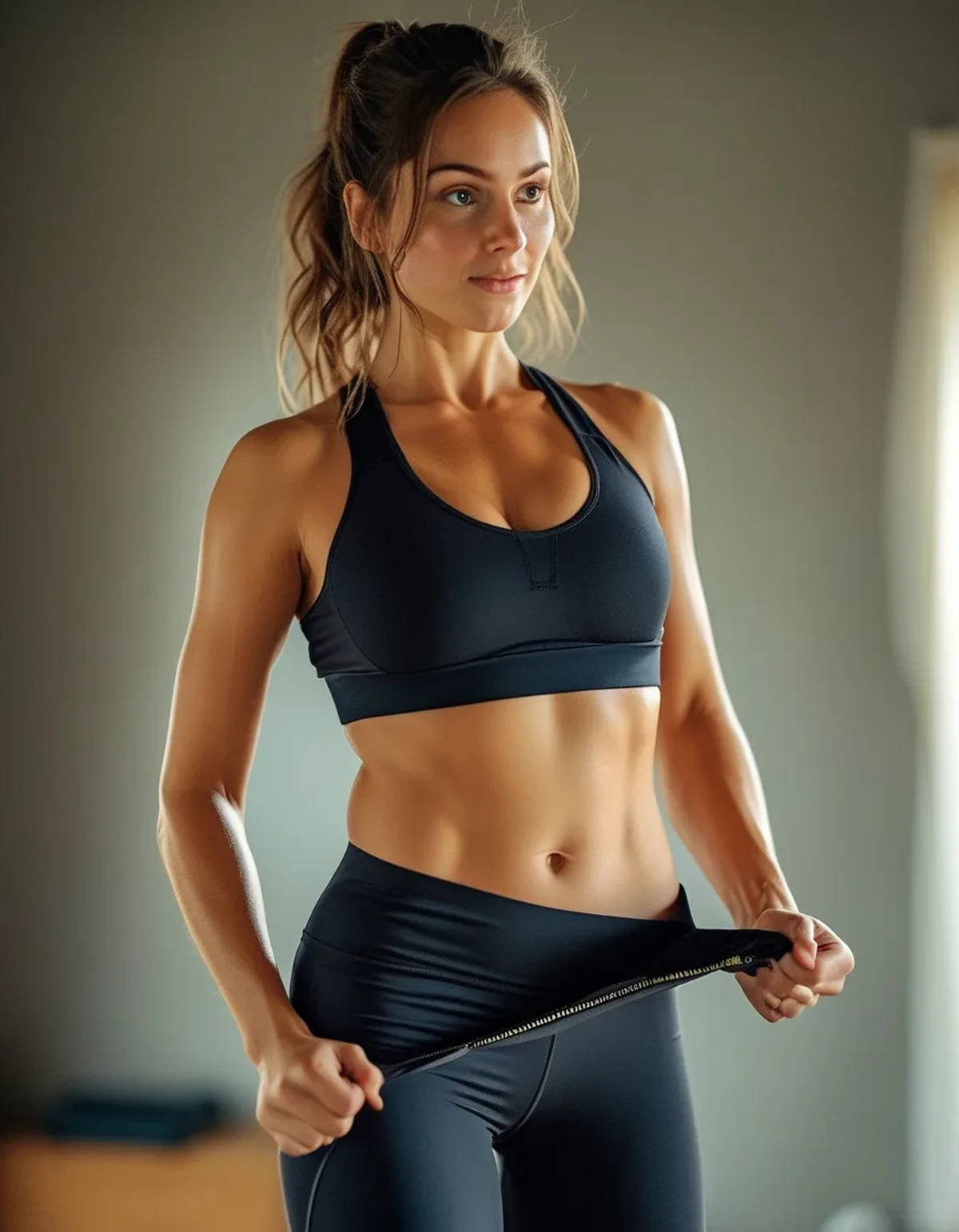
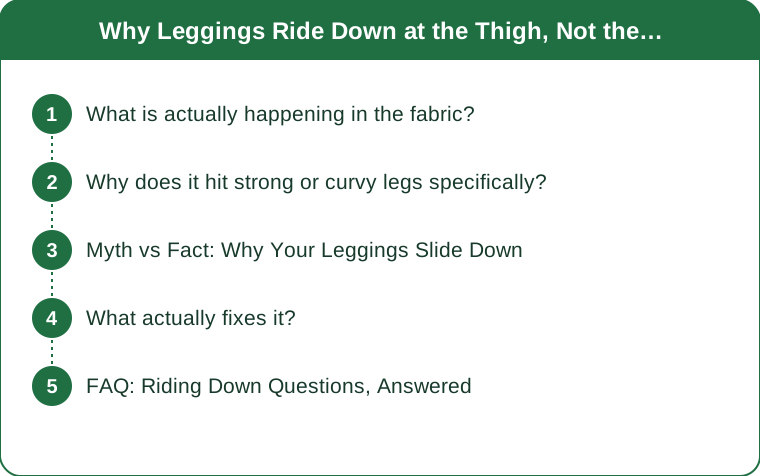
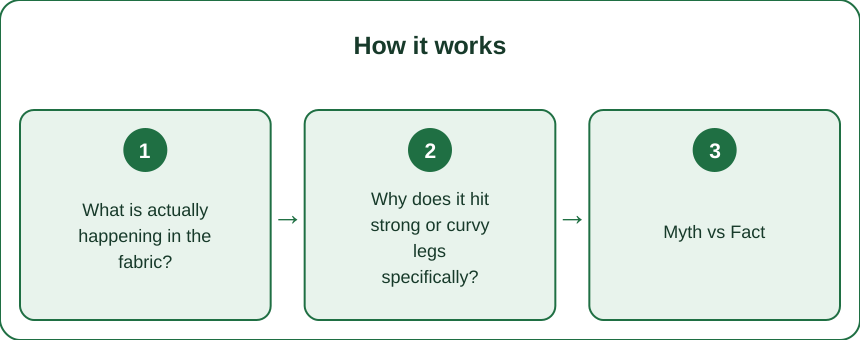
What is actually happening in the fabric?
The thigh is at maximum stretch before you even move, and stretched fabric has to get its length from somewhere.
Knit fabric conserves area. When you pull it wide it gets shorter, and when it is forced wide beyond its comfortable range it recruits length from adjacent fabric to cover the distance. On a garment, adjacent means above and below.
So if your thigh is stretching the fabric near its limit, the panel pulls fabric down from the hip and crotch area to cover the circumference. That downward migration is the entire mechanism. The crotch seam drops because fabric that was sitting there has been pulled sideways around your thigh.
And then it compounds. Once the crotch seam sits low, the leg tube below it is longer than your leg needs, so it bunches behind the knee. The bunching gives your knee something to catch on every rep, which drags a little more fabric down. You hitch it up, and the cycle restarts.
Critically: none of this involves the waistband at all. It can be gripping perfectly and this still happens, which is why every waistband-focused fix fails. The tension is in the leg panel, and it resolves itself downward because gravity and motion both point that way.
This is also why the problem is worst in the exercises with the largest hip and knee range - squats, lunges, step-ups, stairs. Each rep briefly increases thigh circumference at the bottom position and lets it go at the top, which is a pumping action working fabric steadily downward.
Why does it hit strong or curvy legs specifically?
Because most legging patterns assume thigh circumference is a fixed proportion of hip circumference, and for a lot of bodies it simply is not.
The standard drafting assumption is a smooth taper - hip to thigh to knee to ankle, in predictable ratios derived from the base size. A body with proportionally larger thighs relative to hips - from muscle, from shape, or both - falls outside the assumption. You buy the size that fits your hip, which is what the size chart tells you to do, and the thigh panel arrives already near its stretch limit.
A few compounding factors:
- Muscle changes the shape, not just the size. A developed quad and glute produce a thigh that changes circumference substantially between standing and a deep squat - far more than the pattern anticipated. Fabric that fits standing can be well past its limit at the bottom of a rep.
- Panel seams matter enormously here. Leggings with a separate inner thigh panel or a curved side seam distribute stretch across more pieces. A two-panel legging concentrates all of it in one place.
- Compression fabric is not the same as high-recovery fabric. Heavy compression can feel supportive and still fail to spring back, which is the worst combination - tight all day, and sagging by hour two.
And there is a quiet knock-on effect: over-stretched fabric goes semi-sheer exactly where it is over-stretched. So the same pattern mismatch that causes the sagging causes the opacity complaint, and people treat those as two separate problems with the same pair.
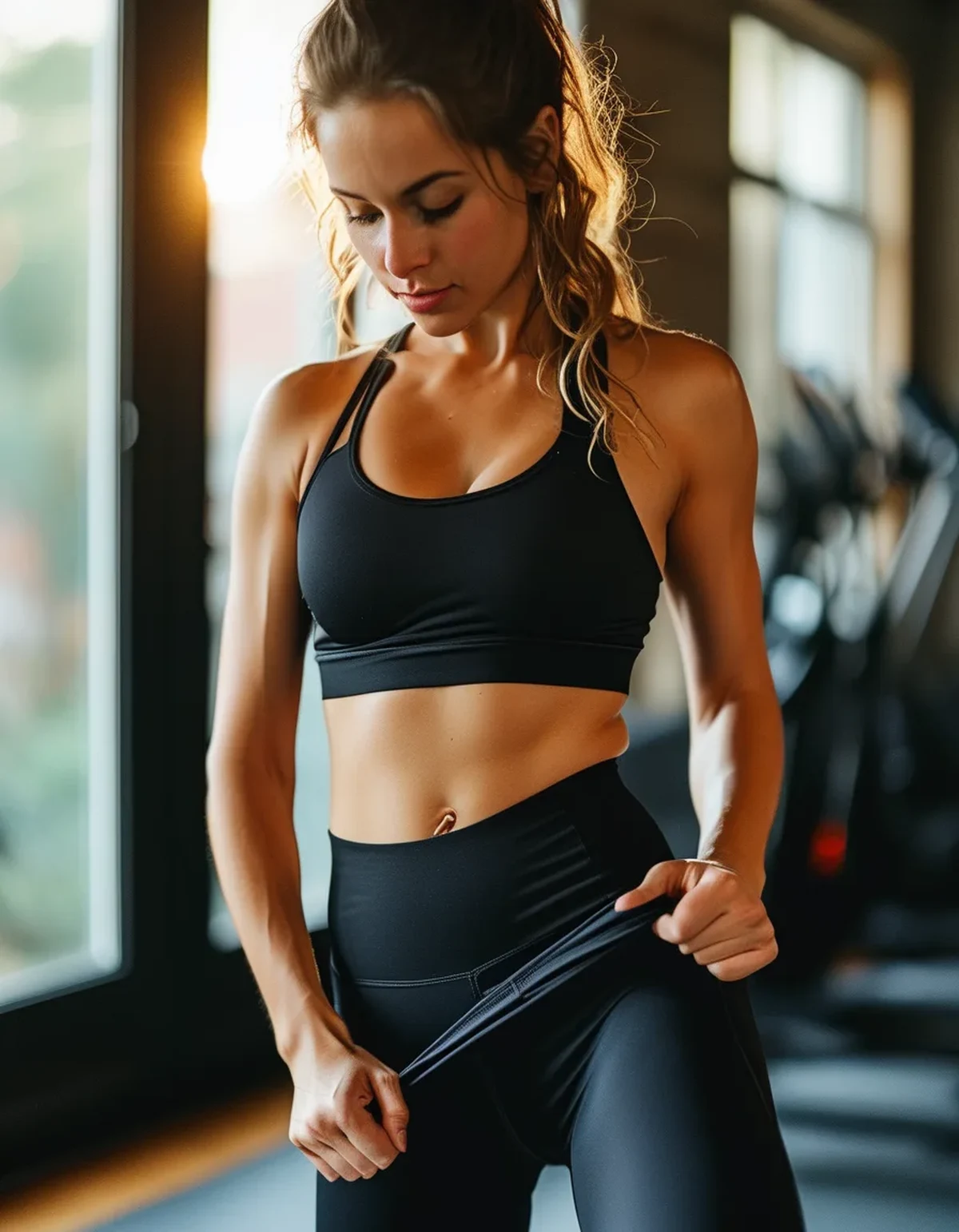
Myth vs Fact: Why Your Leggings Slide Down
Myth: A tighter waistband fixes leggings that ride down. Fact: Only if the waistband is what moved. If the band is still where you put it and the crotch seam has dropped, the tension is in the leg and a tighter band just adds pressure at the waist without changing anything below it.
Myth: Sizing down gives more grip. Fact: Sizing down makes the thigh panel more over-stretched, which is the actual cause. It is the single most reliable way to make this specific problem worse, and it usually brings sheerness with it.
Myth: Sizing up will fix it. Fact: Sometimes, but you inherit a loose waistband and a long inseam - and if the pattern’s problem is thigh-to-hip proportion, one size up scales both together and the ratio is unchanged. It is a coin flip, not a fix.
Myth: More stretch means better fit. Fact: Stretch and recovery are different properties, and recovery is the one that matters here. A fabric that stretches enormously and returns slowly will bag out within twenty minutes every single session.
Myth: Expensive leggings do not do this. Fact: They do it less often because they are more likely to have multi-panel construction and better recovery fabric - but plenty of premium leggings are two-panel with soft, low-recovery fabric because that is what feels nice in a changing room.
Myth: It will settle after a few wears. Fact: It gets worse. Repeated over-stretching permanently degrades elastane recovery, so a pair that sags a little in week one sags more in month three.
What actually fixes it?
In rough order of effectiveness:
Check the thigh measurement, not the hip. If a brand publishes a thigh circumference, use it as the primary number and treat hip as secondary. Most people size on hip because that is what the chart leads with, and for this problem it is the wrong input.
Buy for recovery, not softness. Look for higher elastane content - roughly 20 to 28 percent - and nylon rather than polyester as the base fibre. Nylon-elastane blends hold shape under repeated stretch noticeably better. The softest, most ‘buttery’ fabrics are frequently the worst offenders here.
Prefer multi-panel construction. More seams means stretch distributed across more pattern pieces. A legging with a separate inner thigh panel, a curved side seam or a gusset will hold position far better than a simple two-panel design.
Look for a gusset. A diamond or triangular crotch gusset directly resists the crotch seam dropping, because it adds fabric exactly where the shortage occurs. It is a small construction detail with an outsized effect on this specific complaint.
Consider a shorter inseam. Seven-eighths and capri lengths have less fabric below the knee to bunch and migrate, so the whole cycle has less to work with. On a late-summer-into-autumn wardrobe, that is a convenient answer anyway.
And wash cold, hang dry, always. Heat is the fastest way to destroy elastane recovery. A pair that behaved well when new and sags now has usually not stretched out - the elastic has stopped returning.
FAQ: Riding Down Questions, Answered
Should I size up or size down if my leggings sag at the crotch?
Neither reliably works, because the issue is thigh-to-hip proportion rather than overall size. If you must choose, size up and accept a looser waistband - a loose band is a fixable annoyance, while an over-stretched thigh panel causes sagging, sheerness and premature wear all at once. The better move is a different brand with a different pattern.
Do gussets really make a difference?
Yes, more than most construction details. A gusset adds fabric at exactly the point that runs short when the thigh panel borrows length, so it directly opposes the mechanism. It also reduces seam stress at the four-way junction, which is where leggings most often fail. If a pair has one, it is usually a sign of a thoughtful pattern generally.
Why do they go slightly see-through in the same place they sag?
Same cause. Fabric stretched beyond its intended range has fewer yarns per unit area, so light passes through. Sagging and sheerness at the same spot is the clearest possible confirmation that the panel is over-stretched rather than that the fabric is thin.
General garment information, not medical or fit advice for any individual.
TL;DR:
- Stable waistband plus dropping crotch seam means the thigh panel is over-stretched and borrowing fabric from above.
- Tightening the waistband does nothing - it was never the part that moved.
- Sizing down makes it worse. More stretch at the thigh is the cause, not the cure.
- What works: thigh measurement over hip measurement, recovery over softness, multi-panel construction, and a gusset.
- Sagging and sheerness in the same spot is the same problem twice, not two problems.
Once you can see that the leg is pulling fabric down rather than the waist letting it go, the whole shelf of waistband-focused advice stops being relevant - and the fixes that do work get much easier to spot.
See It in Motion
Seen here: Super High Waist Embossed Yoga Leggings with Inner Pocket — shop it on bubblelime.com
Keep Reading
This article is for general informational and styling purposes only. Fit, sizing, and product availability may vary.