The Bike Short Inseam Length That Actually Stops Thigh Chafe
Quick Answer: For thigh chafe, the hem needs to sit below the widest point of your inner thigh contact zone - for most people that means an inseam around 8 to 10 inches rather than the 5 inch style that dominates the market. A short hem that ends inside the contact zone gets pushed upward by every stride, which is why short bike shorts both ride and chafe. Measure the contact zone rather than guessing: it usually starts near the crotch and extends 4 to 7 inches down.
You bought bike shorts specifically to stop your thighs rubbing, and they rolled up into your crotch by the second mile.
That is not a size problem and it is very rarely a fabric problem.

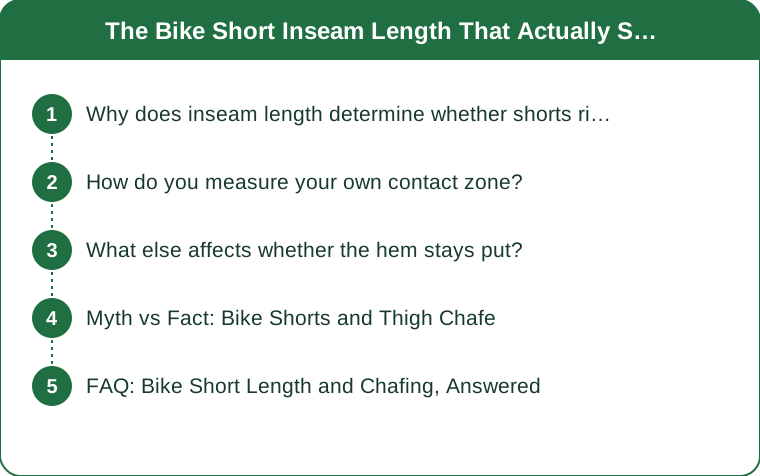
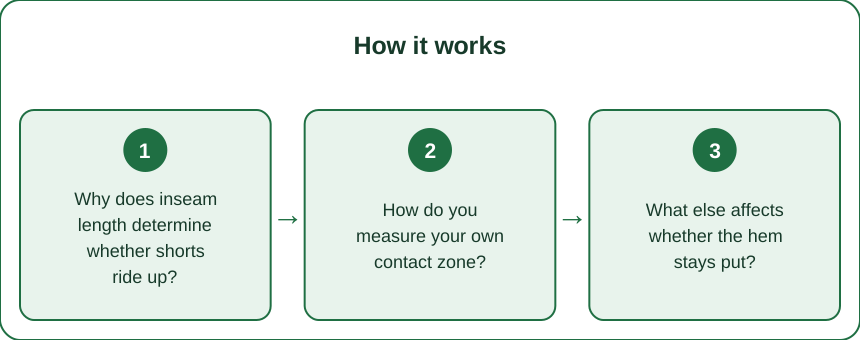
Why does inseam length determine whether shorts ride up?
Your thighs push the hem upward with every stride. Where your inner thighs make contact, the two surfaces move against each other continuously. Anything caught between them - including a hem - gets worked upward by that motion.
A hem that ends inside the contact zone has nowhere to go but up. Once fabric is being gripped between two moving surfaces, each stride nudges it a millimetre further. Over thousands of strides, that is the full journey from mid-thigh to crotch.
A hem that ends below the contact zone is not being gripped at all. The fabric that covers the rubbing area stays in place because it is held by the whole leg above it rather than being pinched at its edge.
This is why sizing up so often fails. A larger short is looser everywhere, which means more fabric available to be gripped and bunched. If the length is still wrong, the extra room makes the climbing worse rather than better.
And it explains the frustrating pattern of what works. Long cycling shorts and mid-length bike shorts rarely ride; 5 inch shorts frequently do. The difference is not quality, it is whether the hem terminates above or below the contact zone.
Silicone grippers help, but they are a second-order fix. A gripper can hold a hem that is only slightly inside the zone. It cannot hold a hem that sits right in the middle of it, which is why grippers on very short shorts still fail.
How do you measure your own contact zone?
Stand naturally in front of a mirror in underwear. Look at where your inner thighs actually touch. For most people the contact starts within an inch or two of the crotch and extends downward.
Mark the lowest point of contact. Place a finger where the thighs stop touching and measure from the crotch down to that point. This is the number that matters, and it is usually somewhere between 4 and 7 inches.
Add at least 2 inches for your target inseam. If contact ends at 6 inches, an 8 inch inseam gives you 2 inches of hem sitting clear of the zone. That margin is what keeps it from climbing.
Measure standing, not sitting. Sitting widens the contact area considerably and will give you a number that leads to shorts longer than you need for walking and running.
Repeat the check after any significant change. Contact zones shift with weight change, and a length that worked last year may sit inside the zone now, which is often the real explanation for a favourite pair suddenly riding.
And note that the zone is not symmetrical for everyone. If you have a noticeable difference between sides, fit to the longer measurement.

What else affects whether the hem stays put?
Fabric weight is the second variable. A light, slippery fabric slides more readily under friction. A slightly heavier, more compressive knit resists being worked upward and is generally the better choice for anyone chafing.
Compression level matters more than fabric name. A short that holds gently against the leg has less loose material to be gripped. Loose leg openings on an otherwise fitted short are the most common design flaw in this category.
Flat hems beat elasticated ones. A bonded or laser-cut hem sits flush with the leg. An elasticated band creates a raised edge and, on a curvy fit, a visible indent that becomes its own rub point.
Seam placement is worth checking. An inseam seam that sits directly in the contact zone is a friction ridge in the worst possible place. Look for shorts with the seam moved forward or with a gusset construction instead.
Moisture changes everything. Damp fabric grips more, so shorts that behave for the first mile can start climbing once you are sweating. Test in real conditions rather than in a changing room.
And sizing down is not the fix people think it is. A too-tight short creates its own pressure lines and cuts into the thigh, which produces a different irritation in the same place.
Myth vs Fact: Bike Shorts and Thigh Chafe
Myth: Longer shorts are hotter. Fact: a few extra inches of thin technical fabric makes a negligible difference to temperature, while skin-on-skin friction generates real heat and irritation. Most people report longer shorts feeling cooler in practice.
Myth: Sizing up stops shorts riding. Fact: it adds loose fabric for your thighs to grip and usually makes the climbing worse. Length and compression are the variables that matter.
Myth: Silicone grippers solve everything. Fact: they help hold a hem that is nearly in the right place. They cannot fight a hem sitting in the middle of the contact zone.
Myth: Chafing means your shorts are the wrong fabric. Fact: fabric matters, but a correctly placed hem eliminates the contact entirely, which is a more reliable fix than optimising a fabric that is still in the wrong position.
Myth: Anti-chafe balm is a substitute. Fact: it is an excellent backup and a poor primary strategy - it wears off over the exact distances where chafing becomes a problem.
Myth: This only affects one body type. Fact: inner thigh contact is extremely common across sizes. The inseam maths is identical for everyone; only the measurement differs.
FAQ: Bike Short Length and Chafing, Answered
What inseam should I get to stop thigh chafe?
Measure how far down your inner thighs actually make contact, then add at least 2 inches. For most people that lands around an 8 to 10 inch inseam rather than the common 5 inch style.
Why do my bike shorts ride up between my legs?
Because the hem ends inside the area where your thighs touch, so each stride works it upward. A hem that finishes below the contact zone is not gripped and stays where you put it.
Should I size down so they grip better?
No. Too-tight shorts create pressure lines and cut into the thigh, producing irritation in the same place. Aim for correct length with moderate compression instead.
Do silicone grippers work?
They help when the length is nearly right. They cannot hold a hem that sits in the middle of the contact zone, which is why grippers on very short shorts still fail.
TL;DR:
- Inseam length, not size, decides whether bike shorts ride up and chafe.
- Measure where your inner thighs stop touching, then add at least 2 inches - usually landing at an 8 to 10 inch inseam.
- A hem inside the contact zone gets worked upward every stride; a hem below it is never gripped at all.
- Choose moderate compression, a flat bonded hem, and a seam placed away from the rub zone; skip loose leg openings.
- Sizing up adds fabric to be bunched, and grippers only rescue a hem that is already close to right.
Stop shopping for a better fabric. Start measuring where your thighs actually stop touching.
See It in Motion
Seen here: High Waist Embossed Yoga Leggings with Side Pockets — shop it on bubblelime.com
Keep Reading
This article is for general informational and styling purposes only. Fit, sizing, and product availability may vary.