Curvy Fit Long Sleeve Tops That Do Not Pull Across the Bust
Quick Answer: Horizontal pull lines across the bust mean the top has enough width but not enough length over the curve. Fabric has to travel up and over, and standard patterns are drafted for a B cup regardless of size. Look for princess seams, side or bust darts, at least 8% elastane in a knit, and a longer front hem than back hem. Sizing up fixes it only by adding room in the shoulders and waist you did not need.
Those little horizontal lines radiating from the bust are the most common fit complaint there is, and the most commonly misdiagnosed. They are not telling you the top is too small. They are telling you the pattern ran out of fabric going over rather than around.
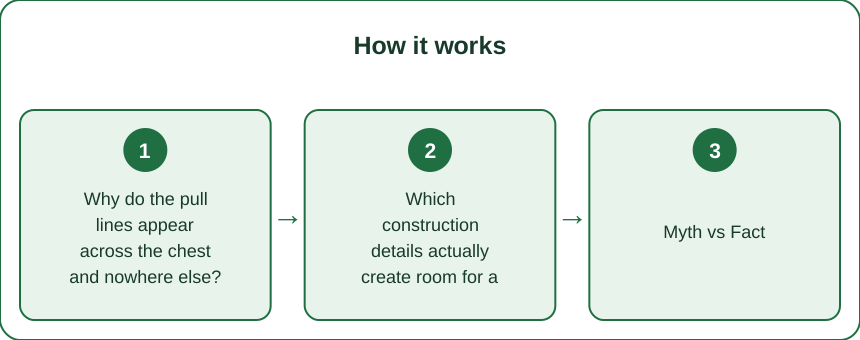
Why do the pull lines appear across the chest and nowhere else?
Picture the fabric path. A flat panel of fabric has to cover a three-dimensional curve. It has to go around the bust - that is width - and it has to go up and over it - that is length. Those are different measurements and a pattern handles them differently.
Most commercial patterns are drafted for roughly a B cup and then graded up. Grading adds width at the bust and waist. What it rarely adds is the extra front length required to travel over a fuller bust, or the shaping that would build the curve into the pattern.
So the fabric borrows length from wherever it can. It pulls up from the hem, creating a front hem that rides higher than the back. It pulls in from the sides, creating those horizontal lines. And it pulls down from the shoulder, which is why the neckline sometimes gapes at the same time the chest is tight.
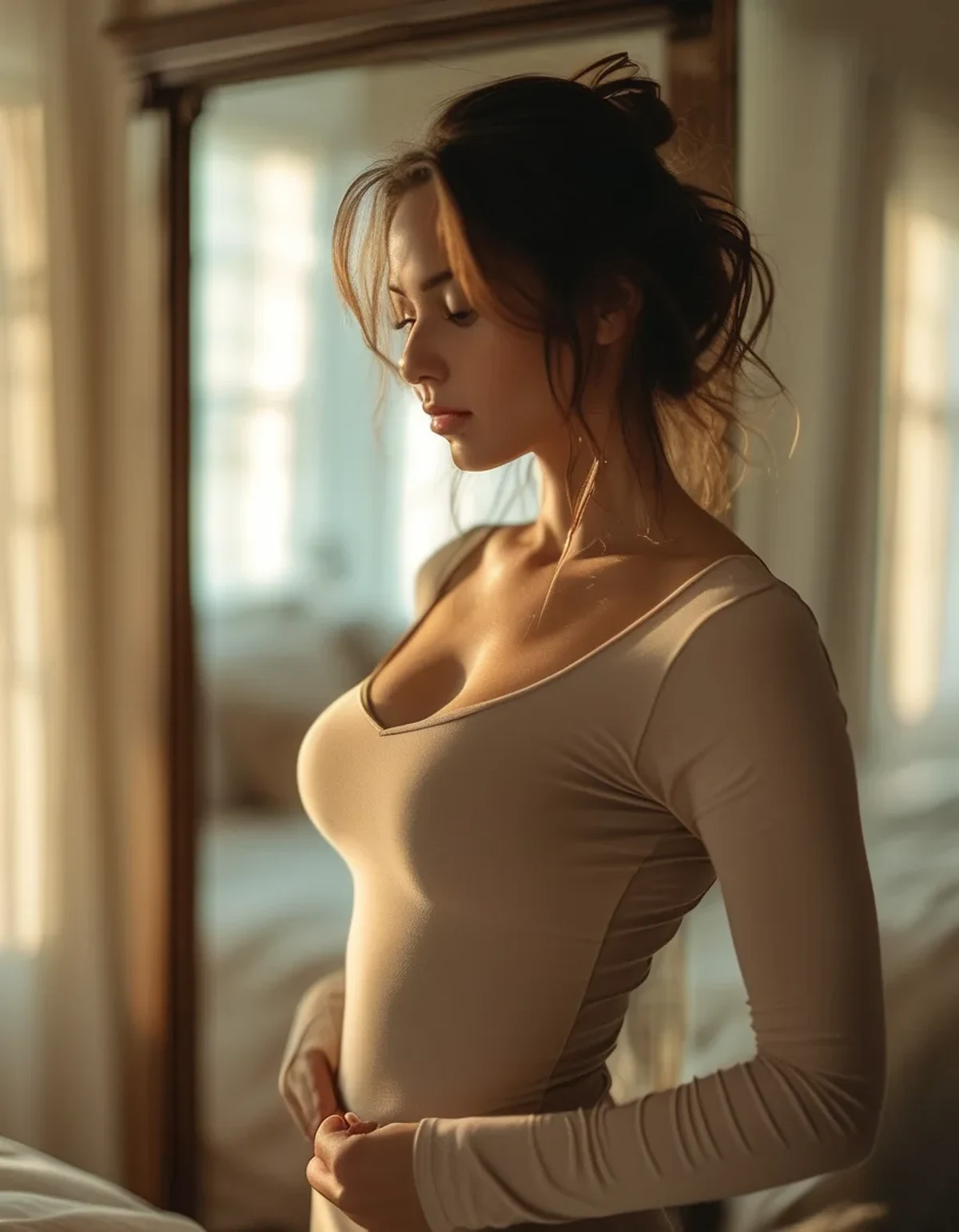
The diagnostic: stand sideways in a mirror. If the front hem sits visibly higher than the back hem, the top needs more front length, not more width. That is a full bust adjustment problem, and no amount of sizing up fixes it - going up a size adds a little front length as a side effect while adding a lot of width you never wanted.
Which construction details actually create room for a fuller bust?
Princess seams are the best structural answer. Two vertical seams run from the shoulder or armhole down through the bust point to the hem, which lets the pattern build actual three-dimensional shape rather than relying on stretch. A princess-seamed top fits a range of bust sizes far better than a flat two-panel top ever will.
Bust darts do the same job with a single seam, usually angled up from the side seam toward the bust point. Less common in activewear because darts read as formal, but they work. If a top has a side dart, the brand thought about this.
A curved or scoop hem - longer at the front and back, shorter at the sides - accommodates the front length the bust steals. Straight hems are the ones that end up riding up.
Fabric with 8%+ elastane and four-way stretch. In a knit top, stretch does a lot of the work that seaming does in a woven. Check the composition and pull the fabric diagonally.
Ruching at the side seams is the underrated one. It looks decorative, but it functions as an adjustable dart - it lets the front panel expand over the bust and contract at the waist without a fixed seam line. On a stretch top, side ruching is often the single most flattering feature available.
Myth vs Fact: Fit beliefs that keep people in the wrong size
Myth: If it pulls, size up. Fact: sizing up adds circumference everywhere. The shoulder gets wider, the armhole drops, the waist gets baggy, and the front length increases only slightly. You trade one bad fit for a different bad fit. Change the cut, not the size.
Myth: Fitted tops are unflattering on a full bust, so wear loose. Fact: a genuinely loose top hangs from the widest point and reads as a tent from there down. A top that is fitted through the shoulder and waist with room built in at the bust is almost always more flattering than a shapeless one.
Myth: The size on the label should match your bra size. Fact: garment sizing and bra sizing have no shared standard. A 34DD and a 38B can have similar bust measurements and need completely different tops, because the difference is in the ratio between the bust and the frame, which is precisely what standard grading gets wrong.
Myth: Stretch fabric solves everything. Fact: stretch solves width beautifully and length only partially. A two-way stretch knit that stretches side to side and not up and down will still pull the hem up. Four-way is what you want.
Myth: Expensive brands draft better for a full bust. Fact: price correlates with fabric quality, not with pattern range. Some of the best curvy drafting comes from mid-price brands that specialize, and some of the worst comes from premium labels using a single fit model.
How do you test a long sleeve top in sixty seconds?
A quick sequence that catches almost everything:
- Put it on and stand still. Look for horizontal lines radiating from the bust point. Any visible line means the fabric is under tension there.
- Check the side profile in a mirror. Front hem higher than back hem means insufficient front length.
- Cross your arms in front of you. If the back binds or the sleeve cuts into the bicep, the armhole is wrong.
- Raise both arms overhead. The hem should lift, but it should come back down when you lower your arms. A hem that stays up has no length to spare.
- Check the neckline while looking down. Gaping at the front neckline with tightness at the bust is the classic signature of a top that needs a full bust adjustment.
- Sit down. Fabric behaves completely differently when the torso compresses, and a top that only works standing is not a top you will actually wear.
For online shopping, the two numbers worth hunting for are the garment flat bust measurement and the front length from the shoulder point. If a brand lists both, you can predict fit surprisingly well. If a brand lists neither, order two sizes and expect to return one.
FAQ: Curvy Fit Top Questions, Answered
Can a tailor fix pulling across the bust?
Adding room is much harder than removing it, because there is no spare fabric to work with. What a tailor can do easily is take in the waist and shoulders of a larger size, which is why buying up and altering down is the standard workaround for a woven top. In knits, alteration is less reliable.
Are curvy-fit lines actually drafted differently or just marketed that way?
It varies genuinely. The ones that are real usually say so specifically - a stated cup assumption, a different armhole, or separate flat measurements for the curvy line. If the only difference is the model in the photo, it is marketing.
Why does the same top fit differently in two colors?
Dye and finishing processes change fabric hand and stretch, sometimes noticeably. Darker dyes and printed panels often have slightly less give. This is a real effect and not your imagination.
What about layering a fitted long sleeve under things?
A fitted base layer under an open cardigan or jacket is the most reliable outfit for this body ratio, because the open layer creates a vertical line at the sides and the base layer does the fitting. Just make sure the base has four-way stretch - it will be the layer doing all the work.
TL;DR:
- Horizontal pull lines mean not enough length over the curve, not enough width around it.
- Look for princess seams, bust darts, curved hems, side ruching, and 8%+ elastane.
- Check the side profile - front hem higher than back hem is the tell.
- Sizing up adds room in the shoulders and waist you did not need and barely helps the actual problem.
Once you can name what you are looking at, shopping stops being a guessing game. You are not a difficult size. The pattern just assumed a body ratio that is not yours, and there are brands that assume better.
Keep Reading
This article is for general informational and styling purposes only. Fit, sizing, and product availability may vary.