Size Up and Hem, or Buy Petite? The Curvy Fit Decision
Quick Answer: Size up and hem when the problem is circumference - hips, thighs, or seat too tight in your usual size. Buy petite when the problem is vertical - rise too long, knee darts sitting below your knee, or inseam pooling at the ankle. Petite sizing shortens the rise and repositions shaping details, which hemming cannot do; hemming solves length only.
Most people default to whichever one they tried first, and then spend years fighting the wrong variable.
What does petite sizing actually change?
More than length, which is the part most people miss.
A properly drafted petite pattern shortens three separate measurements, not one. The rise - the distance from crotch seam to waistband - typically comes down by 1 to 1.5 inches. The knee position - the point where the pattern narrows for the knee, and where any shaping seam or dart sits - moves up by around an inch. And the inseam comes down by 2 to 3 inches.
Only the third of those can be fixed with a hem.
This is why a hemmed regular legging can still feel wrong on a shorter frame in a way that is hard to name. The knee shaping sits at your lower calf. The waistband sits above your natural waist. The compression zones - which are engineered to hit specific points on the leg - are all displaced downward.
On a standard legging that displacement is subtle. On a shaped legging - one with contour panels, a sculpting seam, or a defined knee - it is very visible, because the design lines are landing in the wrong places.
When is sizing up genuinely the right answer?
When the binding measurement is circumference and the length problem is secondary.
The test: put on your usual size and check three things. Does the waistband roll or dig at the top of the seat? Is there horizontal pulling across the front of the thigh? Does the fabric look strained - noticeably lighter in color - anywhere?
If yes to any of those, the piece is too small in circumference, and no amount of length adjustment fixes it. Size up.
The cost of sizing up is that every vertical measurement grows too. A size up typically adds around half an inch to the rise and an inch to the inseam. So you solve the tightness and inherit a length problem, which is the trade you are making.
That trade is usually worth it, because length is fixable and circumference is not. A hem costs little and takes fifteen minutes. There is no alteration that adds fabric across the hips of a knit legging.
The exception is when sizing up produces a waistband that no longer holds. If the size up leaves the waist genuinely loose, you have moved the problem rather than solved it, and a different brand with a different hip-to-waist ratio is the real answer.

Myth vs Fact: Hemming Activewear
Myth: You cannot hem technical activewear without ruining it.
Fact: You can, but the stitch matters enormously. A straight stitch will break the first time the fabric stretches past the thread’s limit. What works is a stretch stitch - a narrow zigzag, a coverstitch, or a twin needle. Most tailors who handle knits have a coverstitch machine, and coverstitching is what the manufacturer used in the first place.
Myth: Hemming ruins the compression.
Fact: Removing an inch or two at the ankle has essentially no effect on the compression profile of the garment above it. What does affect it is hemming so much that you cut into the shaped calf section.
Myth: You need to hem before you wash.
Fact: The opposite. Wash and dry the garment at least twice first, because technical knits shrink somewhat in the first washes. Hemming a brand-new legging often produces one that is too short two months later.
Myth: Petite sizing is only about being short.
Fact: It is about torso and leg proportion, not overall height. Plenty of people at average height have a shorter rise and are better served by petite through the body with a regular inseam - which is exactly why some brands sell rise and inseam separately.
What about the middle path - brands with separate inseam options?
This is the best solution when available, and it is worth reorganizing your shopping around.
A brand offering the same size in 25”, 28”, and 31” inseams has usually adjusted the knee shaping position along with the length, which is most of what petite sizing does. You get the circumference of your true size and the vertical proportions of your frame.
What they typically do not adjust separately is the rise, so if your issue is a waistband sitting too high, multiple inseam options do not solve it.
A practical shortcut for identifying your real issue: measure your rise. Sit down, measure from your natural waist down to the seat of the chair. Compare that to the front rise measurement listed on brand size guides, which good technical brands publish.
If your measurement is more than an inch shorter than the listed rise, you are a petite-rise body regardless of your height, and that is the variable to shop for.
Most people have never measured this and are guessing based on how things look. Ten minutes with a tape measure resolves years of trial and error, and it makes online shopping considerably more accurate.
FAQ: Curvy Fit Length Questions, Answered
Can I hem a legging myself without a special machine?
With a twin needle on a standard sewing machine, yes, and it holds up reasonably well. By hand, use a stretch stitch pattern rather than a running stitch. What will not work is a straight machine stitch or fabric glue.
Is 7/8 length just a shorter regular legging?
Usually yes, drafted as a length variation on the same pattern. Which means it may still put the knee shaping in the wrong place for a shorter frame - it just ends before you notice.
What if I need petite in the leg and regular in the hip?
That is the most common curvy-petite combination and it is the reason separate rise and inseam options exist. Failing that, size up for the hip and hem, and accept that the knee shaping will sit slightly low.
TL;DR:
- Petite sizing shortens the rise, moves the knee shaping up, and shortens the inseam - hemming only does the last one.
- Size up when the problem is circumference: rolling waistband, horizontal thigh pull, or strained-looking fabric.
- Length is fixable and circumference is not, which is why sizing up is usually the safer trade.
- Hem with a stretch stitch or coverstitch, and wash twice before hemming so the shrinkage happens first.
- Measure your seated rise and compare it to published size guides - this single measurement resolves most of the guessing.
Brands offering separate inseam lengths solve most of this for you, and they are worth building your shopping list around.
See It in Motion
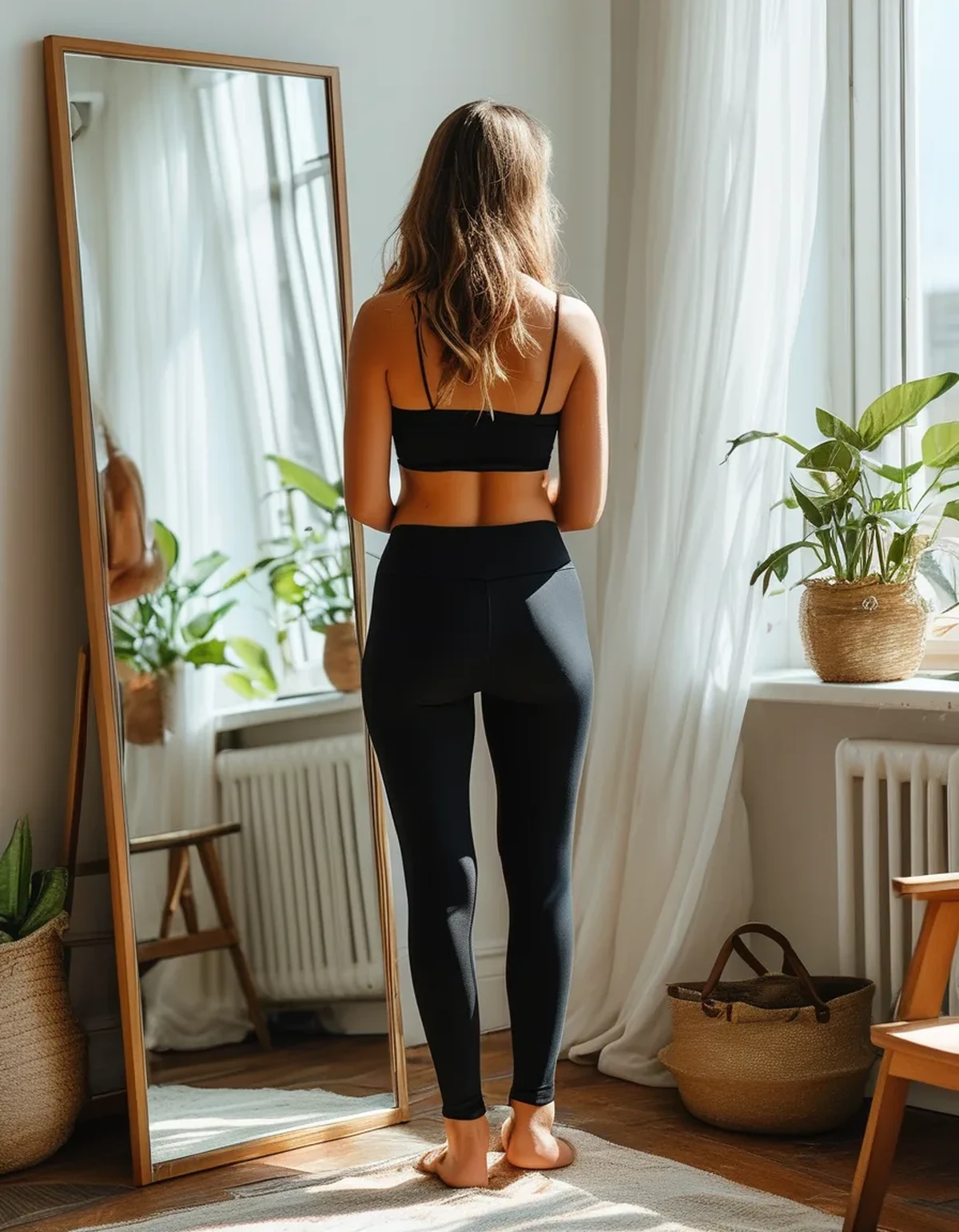
Seen here: High Waist Yoga Leggings with Side Pockets — shop it on bubblelime.com
Keep Reading
This article is for general informational and styling purposes only. Fit, sizing, and product availability may vary.