Why Leggings Wear Out at the Inner Thigh First — and What Actually Prevents It
Quick Answer: Inner-thigh wear happens because that area gets continuous fabric-on-fabric friction with every step, and it is usually the highest-tension zone in the garment. The construction that resists it: a gusset instead of a four-way seam junction, a flat-face knit rather than a brushed one, higher fabric weight (240 gsm and up), and nylon-dominant rather than polyester-dominant blends. Wash cold, inside out, without softener, and air dry — heat and abrasion in the dryer accelerate the same wear the walking started.

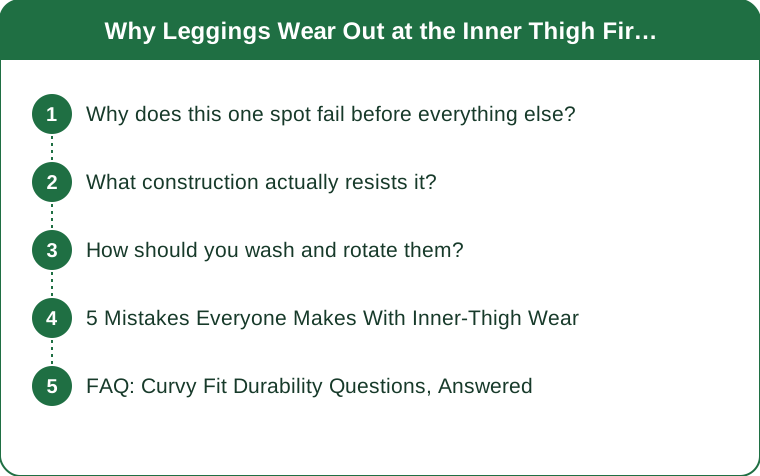
Why does this one spot fail before everything else?
Three forces stack in exactly that area.
Friction. Every stride brings the two inner thighs into contact. Fabric rubbing against fabric abrades the surface fibers, which is what creates pilling and eventually thinning. Over a year of daily wear, that is an enormous number of cycles concentrated in a small patch.
Tension. The inner thigh is where the garment stretches most, especially in a curvy fit where the thigh-to-knee taper is steeper. Stretched fabric has fewer fibers per square inch resisting abrasion, so it wears faster than the same fabric would at rest.
Seam convergence. In many leggings, the front seam, back seam, and both inseams meet at or near the crotch. Four seams meeting at one point creates a stiff, bulky junction that rubs against itself and concentrates stress exactly where you least want it.
Heat and moisture make all three worse. Fibers weaken slightly when warm and damp, which is why summer wear and gym wear accelerate the damage compared to the same hours spent in cool weather.
So it is not misuse. It is the predictable outcome of where the mechanical load lands.
What construction actually resists it?
A gusset. This is the single biggest factor. A gusset is a diamond or triangular panel sewn in at the crotch, replacing the four-seam junction with a smooth panel and distributing stress across a wider area. Leggings with a real gusset routinely outlast the same fabric without one. Check for it by turning the pair inside out — it is visible immediately.
Flat-face knit. Brushed and fleece-backed fabrics have raised fibers that catch and pill quickly under friction. A smooth, tightly knit face has less surface to abrade.
Fabric weight. Look for 240 gsm or higher for daily wear. Lighter fabrics feel better in heat but have less material to lose before they go sheer.
Nylon over polyester. Nylon (polyamide) has significantly better abrasion resistance than polyester at the same weight. Many premium leggings are nylon-elastane for exactly this reason.
Bonded or flatlock seams rather than overlocked ones. A flat seam does not create a ridge that rubs.
What does not help much: paying more, by itself. Plenty of expensive leggings use a brushed polyester with no gusset because it feels wonderful in the store.

How should you wash and rotate them?
Wash cold, inside out. Inside out puts the seams and the exposed face away from the drum, and cold water keeps elastane from degrading. Hot water is the fastest way to shorten a pair’s life.
No fabric softener, ever. It coats fibers, which reduces both moisture wicking and the elastane’s recovery. Softened leggings bag out faster, and bagged fabric wrinkles and rubs more.
Air dry. The dryer combines heat, tumbling abrasion, and mechanical stress. This one change extends a legging’s usable life more than any other.
Wash with like fabrics. Zippers, hook closures, and denim rivets are miniature graters. A mesh laundry bag solves it entirely and costs almost nothing.
Rotate. Wearing the same pair daily gives the elastane no recovery time between wears. Fibers need roughly a day to fully return to shape, and a pair worn every single day loses its hold months earlier than one in a rotation of three.
One more: do not wring them out. Twisting concentrates stress at the seams and can permanently distort the knit.
5 Mistakes Everyone Makes With Inner-Thigh Wear
1. Sizing down for a sleeker look. Tighter fabric is more stretched, which means fewer fibers per square inch fighting the friction. A correctly sized pair lasts noticeably longer.
2. Ignoring the gusset check. Thirty seconds turning the pair inside out before buying tells you more about longevity than any product description.
3. Assuming pilling means low quality. Pilling is a surface symptom of friction. It happens to good fabrics too — the difference is that good fabrics pill without thinning, while cheap ones do both at once.
4. Using the dryer for a quick refresh. Even ten minutes on low is heat plus tumbling. Hang them near a fan instead.
5. Waiting until they go sheer to retire them. Once the fabric thins, it is thin. Move a worn pair to lounge-only duty before the day it fails in public, not after.

FAQ: Curvy Fit Durability Questions, Answered
Can you repair a thinned inner thigh?
A patch on a stretch fabric rarely holds, because the patch does not stretch with the surrounding knit and the seam becomes a new stress point. The realistic move is to demote the pair to home wear.
Do curvy-fit cuts wear out faster than regular cuts?
Not inherently — a curvy cut has more fabric through the thigh, which usually means less stretch tension there and can actually last longer. What matters is whether the pair fits, since any legging stretched past its comfort range wears quickly.
Are shorts under leggings worth it?
For high-friction activity, yes. A light seamless short adds a sacrificial layer between the thighs and takes the abrasion instead of the legging. Cheaper to replace, too.
Does color affect how visible the wear is?
Black shows thinning most obviously because the sheen changes as fibers break. Heathered and patterned fabrics hide early wear better, which is a mixed blessing — you notice later, when it is further along.
TL;DR:
- Inner-thigh wear is friction plus tension plus seam bulk, all concentrated in one patch.
- Buy for a gusset, a flat-face knit, 240 gsm or heavier, and nylon-dominant fabric.
- Wash cold and inside out, skip softener, and air dry — the dryer does most of the damage.
- Rotate between at least three pairs so elastane can recover between wears.
- Correct sizing outlasts sizing down, every time.
Most leggings do not die of old age. They die at the inner thigh, and almost everything that gets them there is preventable.
See It in Motion
Seen here: High Waist 8” Yoga Shorts — shop similar styles on bubblelime.com
Keep Reading
This article is for general informational and styling purposes only. Fit, sizing, and product availability may vary.